
Right for the Wrong Reasons
The sad story of Ignaz Semmelweis, Savior of Mothers

Over Christmas, I found myself face to face with a ferocious five-year-old interlocutor eager to advise me on the merits of handwashing. “You didn’t wash your hands,” he told me solemnly, as I prepared a plate of food. “In my classroom, we always wash our hands before we eat.” Curious, I asked some follow-up questions. Why do you wash your hands in your classroom? His immediate and gleeful reply: “Kill the germs!” Germs, my young friend could explain, were teeny-tiny creatures that made you sick, could be passed from person to person, came from dirt, and were destroyed by handwashing.
Our children learn these facts like a catechism from parents and teachers. They repeat them like a truism, and believe them before experiencing any first-hand observational evidence. As I stared into his earnest eyes I couldn’t help but think: Ignaz Semmelweis would be delighted.
In a world where we know, know, from near-infancy that microscopic creatures exist and that they can cause disease, it is almost impossible to truly understand the mindset of a pre-germ theory human. Our world is premised on an understanding of infectious disease that dates back only to the late 1800s. Even our basic preference for cleanliness over dirt, in its modern iteration, is learned rather than innate. A modern person, transported to the world of 200 years ago, would be overwhelmed by the filth more than any other deprivation.
And for those of us who grew up in classrooms that wash their hands, the modern value of cleanliness makes the story of Ignaz Semmelweis easy to misrepresent. Today, Semmelweis enjoys a posthumous fame that would have shocked him in life. He is revered as the “Savior of Mothers,” a tragic figure whose brave fight to save young women from the hubris and ignorance of their physicians was met with scorn and derision by his peers.
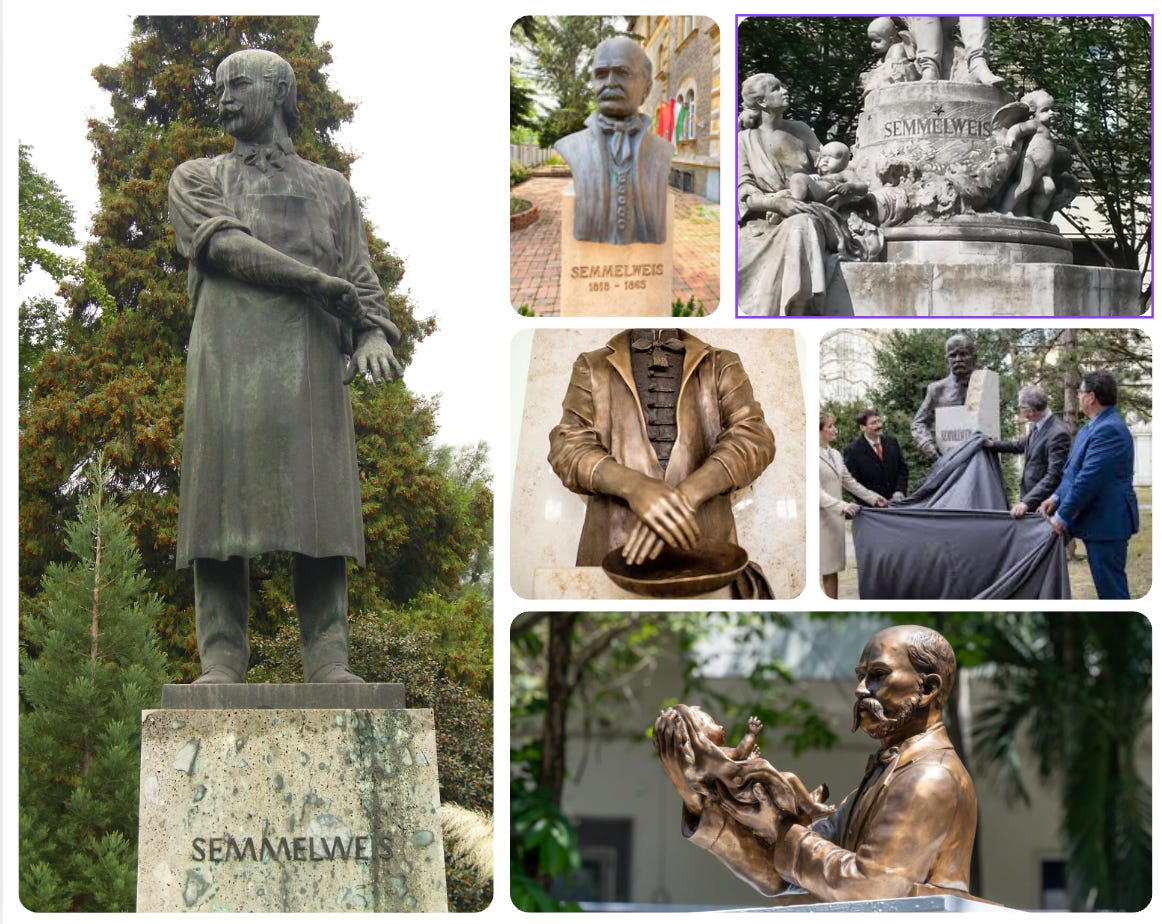
He has all the hallmarks of a folk hero. He was an underdog with the wrong accent, the wrong background, and an unpopular theory that time proved to be true. He fought to protect poor young women, and—the story goes—paid with his life, driven literally mad by a world that didn’t recognize his wisdom until he died a lonely death in a sanatorium. The narrative is all the stronger because it doesn’t require complex scientific understanding. Semmelweis argued for something that today feels obvious to the point of being self-evident. In an era before personal protective equipment, when physicians simply rubbed their hands on a towel between cadaver dissections and clinic bed examinations, Ignaz Semmelweis asked his peers to wash their hands.
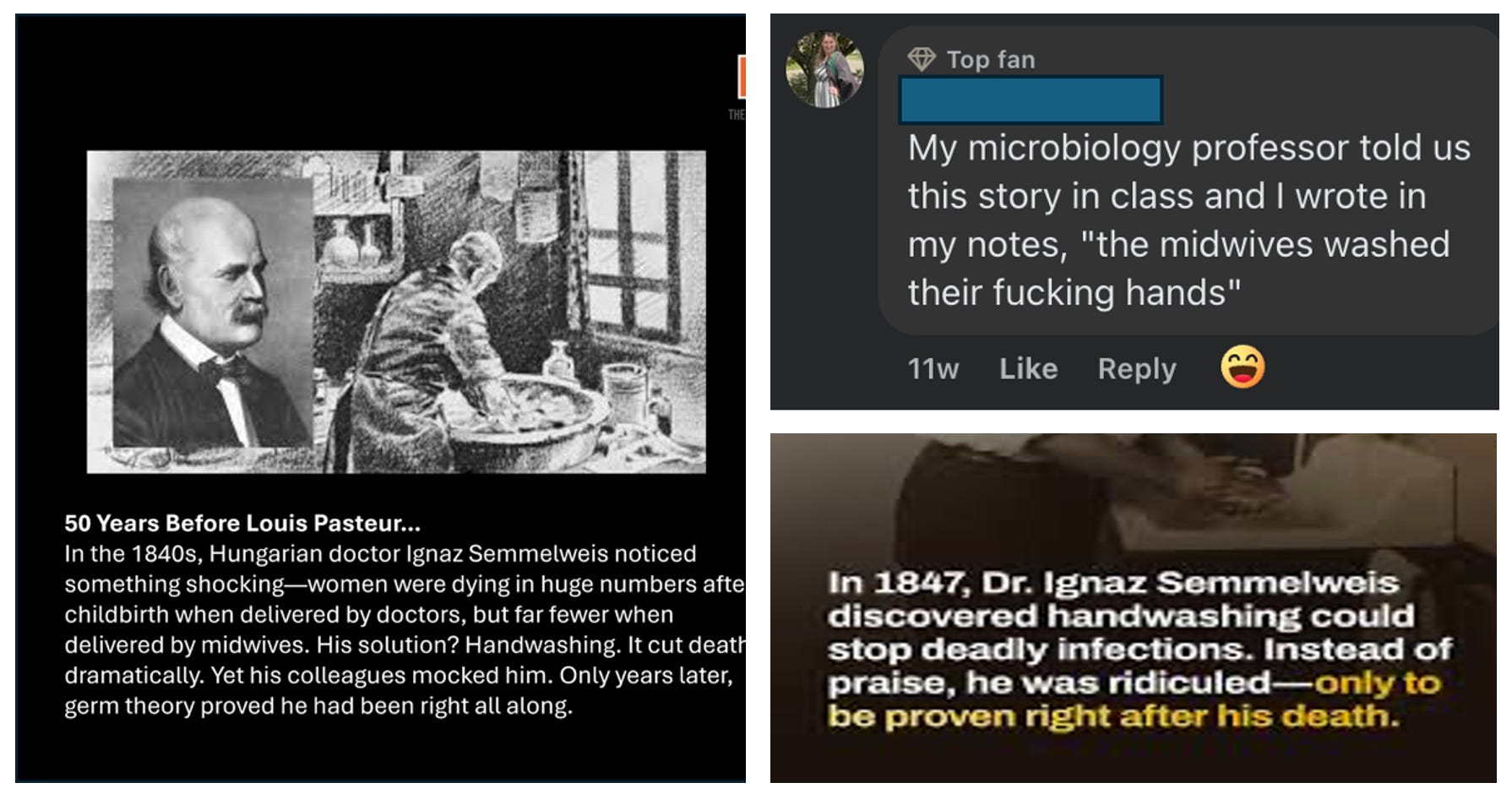
It’s the wrong story. But to appreciate the right one, you have to come with me to a time before germ theory. A time when chamber pots were emptied into the streets, and a surgeon’s prowess in the operating room was demonstrated by the thickness of the blood stains on his frock coat. The idea of a surgeon passing from autopsy to birth without a stop-over at the sink is appalling, until you learn, for example, that a single sponge was often used for repeated vaginal examinations of different women in labor. The sponge was rinsed with water: no visible contaminant remained. Would you be the one to suggest to serious men of science that some invisible and magical force remained thereon, to do mischief in a means unknown and unobservable?
So come with me, pre-germ theory scientists. But wash your hands first.
A tale of two wards
It’s 1846. In Europe, the feeling is one of modernity, progress, and scientific thought. Steam engines power giant ocean liners and support huge railroads, telegraph networks connect continents, and new factories are bringing industry, jobs, and political change to cities. Large public hospitals provide free care to people who previously went without. Microscopists are cataloguing the fascinating tiny world first glimpsed by Leeuwenhoek in the 1600s, and anatomists are performing autopsies on nearly every hospital death. Medical students gather in the dissecting rooms for hours, learning on real bodies what was once taught with models or pictures. Illness, in this very modern world, has real and physical causes; things that can be observed, quantified, explained, and remedied.
But it’s still 1846. Life expectancy hovers around 40. Anesthesia, using ether, was just tried for the first time this year. This is the year Robert Liston reportedly performed his infamous “most deadly operation in history,” and surgery of any kind is often fatal. The first antibiotic won’t be widely available for another century. Half of all children die before the age of five, and many women die in childbirth.
In Vienna, a young woman expecting her first child—if she was not wealthy enough to have a private physician make a house call—would have access to free care at the University Hospital. Vienna’s poor took advantage of the care, but they arrived at the hospital doors pre-warned. In whispers, friends and relatives would tell them: When you get there, ask to be admitted to the midwives’ ward.
The University of Vienna Hospital had two wards for pregnant women: one run by midwives, and one run by physicians and medical students. Both wards knew the terrifying specter of childbed fever. A woman would have a normal, healthy pregnancy, followed by uncomplicated labor and a seemingly healthy birth. Within hours, she would begin to grow weak, with a high fever, delirium, and eventual death. Often, but not always, her baby suffered the same fate. Childbed fever was the terror of the lying-in ward, and though its horror had accompanied births since antiquity, its cause and treatment remained unknown. It struck with curious intensity in certain places and times, and left others untouched. But most concerning for the scientific minds of the 1840s, its prevalence in public hospitals was skyrocketing.
In Vienna, as in most major cities, both maternity wards were busy, delivering thousands of babies a year. Unlike most major cities, the hospital in Vienna kept meticulous records.
In the maternity ward run by midwives, approximately one in 50 women would die of childbed fever. In the second ward, equally busy and staffed by physicians and medical students, the death toll could rise as high as one in four. A woman arriving to the hospital to give birth would have been warned. Please, she would beg the clerk. Please, send me to the midwives.
The Discovery
Ignaz Semmelweis grew up in Budapest, the fifth of ten children in a prosperous merchant family. As a German immigrant to Hungary, Ignaz grew up speaking German rather than Hungarian. The result was an accent that followed him into his professional life and, in his mind, marked him as an outsider everywhere he went.
When Semmelweis finished his schooling, obstetrics and gynecology did not yet hold a respected position in academic medicine. It was a field historically dominated by female midwives; with the establishment of new lying-in wards many early physicians found their way to obstetrics accidentally. Semmelweis was no exception, having been rejected in his original applications for posts in internal medicine. When an obstetrics post became available, he obtained a master’s in midwifery in order to apply. He was appointed assistant to Professor Johann Klein in the First Obstetrical Clinic of the Vienna General Hospital on July 1, 1846.
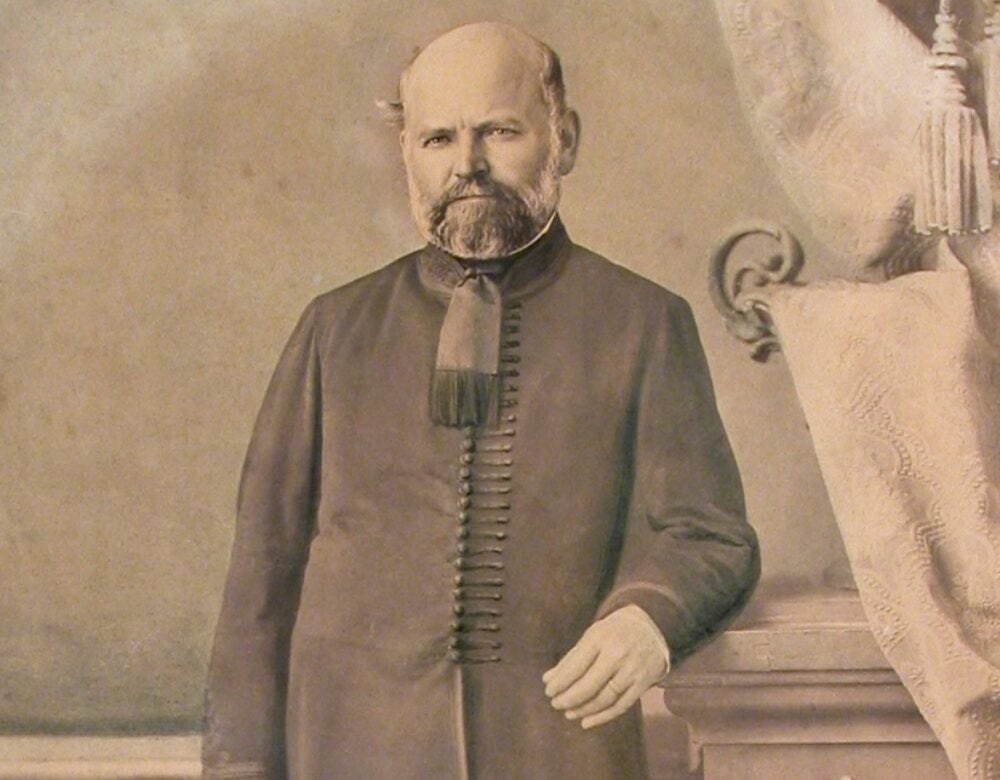
Semmelweis was struck immediately by the high mortality rate for laboring mothers, as well as the stark discrepancy between the midwives’ and doctors’ wards. Childbed fever was known throughout Europe, and everyone knew that it struck in some places more than others, and at some times more than others. One month, there might be almost no cases; at another time, hardly a bed would be left untouched. In the community, an obstetrician would suddenly find his patients falling victim one after another in rapid succession while a colleague’s patients were left untouched.
The obstetrics world had proposed any number of theories to explain the disease, and any number of attempts to treat or prevent it. With no concept of a germ theory of disease and a new reverence for anatomy, many physicians wanted to attribute the problem to some internal female structure. This was supported by long-held descriptions of breast milk as a transformation from menstrual blood, a physiologic theory handed down from Aristotle and Galen. Leonardo da Vinci proposed an anatomic explanation for this belief in his famous “coitus drawing,” which shows a duct connecting the woman’s uterus to her nipple—a duct necessary to explain the Galenic theory of milk production, but not a structure that exists in a woman’s body.
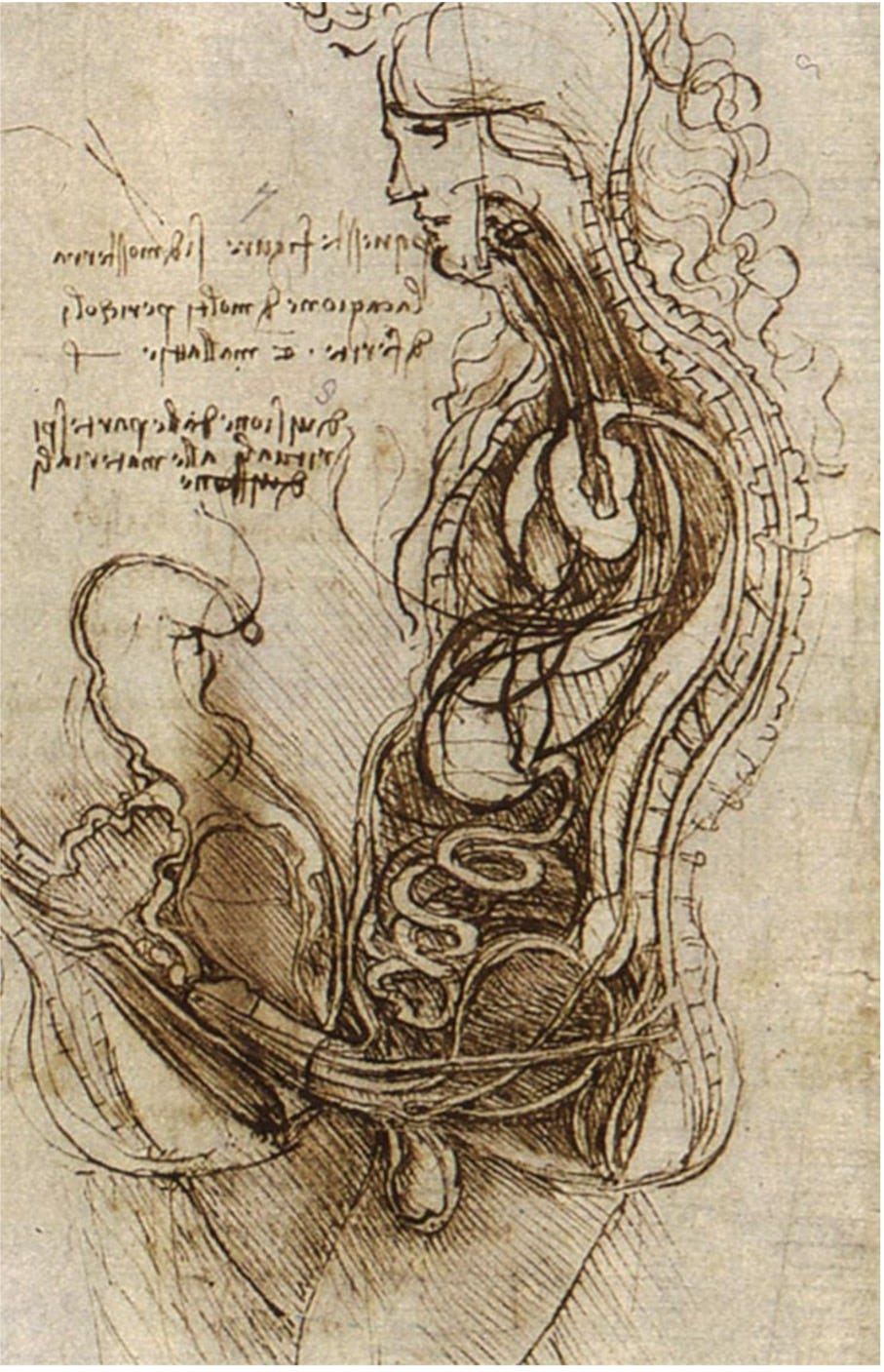
Physicians noticed that milk production slowed when a woman developed childbed fever. On autopsy, they found the abdomen full of thick, white fluid. Today, we know this fluid to be pus—the liquefied remains of dead white blood cells attempting to fight off an intra-abdominal strep infection. But at the time, it was seen as more evidence of a blockage in the feminine fluid flowing from uterus to breast.
Semmelweis initially ignored theories of physiology and focused on the observed difference in death rates. Regardless of the mechanism of disease, some difference in treatment or behavior must explain the different results seen in the two wards. Midwives, he found, had women lie on their sides during delivery. He had the doctors do the same, without effect. He saw that the priests who attended dying women would walk through the doctors’ wards ringing their bells to signal the death. Semmelweis asked them to avoid patient areas, which they did; it’s a good bet that patient morale improved as a result, but the mortality from childbed fever remained unchanged.
Semmelweis became obsessed with the problem, driven to distraction by the persistent and overwhelming death he saw around him. He spent more time than ever in the cadaver labs, personally inspecting the body of every woman who succumbed. His breakthrough moment came in 1847, when his close friend and fellow physician Jakob Kolletschka received a small cut on his finger while completing an autopsy of a woman who had died from childbed fever. Such an injury was not uncommon, and the result was also predictable: Jakob died of a fever himself only a few days later. As with most deaths in the hospital, Jakob received an autopsy—and the grieving Semmelweis pored over the description of his friend’s remains. In shock, he realized that “the disease from which Kolletschka died was identical to that from which so many hundred maternity patients had also died.”
Now armed with observations, Semmelweis dared to propose a new theory: there was some sort of “cadaver particle,” invisible to the eye, which could cause childbed fever. This theory finally explained the difference in the death rates between the wards, because unlike physicians, midwives did not have dissecting privileges. Without cadaver particles, they could not carry the disease from corpse to patient. It was a theory that gave Semmelweis a path towards prevention. If the cadaver particles could be eliminated, the disease transmission could be stopped. Since there was no visible contaminant that could be removed, Semmelweis focused on the one observable feature that clung to a physician after a dissection: the smell. Doctors had long used chlorine as a reliable way of removing the smell of cadavers from their hands. Reasoning that whatever caused the smell might cause the disease, Semmelweis mandated chlorine handwashing in the doctor’s ward in Vienna. In 1847, he saw the maternal mortality rate fall from almost 20%, to less than 2%, within months.
The Aftermath
In the light of history, it’s easy to imagine that only the willfully ignorant could dismiss Semmelweis’s results. Biographers and popular historians (including a 2023 movie) usually argue that:
“many [doctors] were outraged at the suggestion that they themselves were the cause of their patient’s miserable deaths. Consequently, Semmelweis met with enormous resistance and criticism.”
What alternative explanation is plausible? Semmelweis’s results were beyond question, as he himself would argue throughout his life. But to the modern reader, the narrative is compelling not because of the data but because of how deeply we have internalized the germ theory. We have learned practically from our cradles that germs cause disease, and handwashing prevents it. Semmelweis’s solution, simplified from “chlorine to eliminate cadaver particles” into “handwashing,” is self-evidently true to the modern mind.
Semmelweis found his conclusions self-evident, too. But he was speaking to scientists for whom invisible agents of transmission, without observational proof, were unconvincing. He was not the first person to suggest that doctors could transmit disease. For hundreds of years, “contagionists,” who believed that disease could be transmitted on infected material, debated with “anti-contagionists,” who argued for environmental factors like polluted air. While the germ theory would eventually prove the contagionists right, in the 1840s, both theories had strong observational evidence.
Semmelweis’s major contribution was a truly effective method of prevention, based in a contagionist framework. His chlorine solution, although he did not know it, was bactericidal. It killed the streptococcus bacteria that caused childbed fever. His own theory of transmission was incomplete (at best), but his observations were real and valid. Medical historian Sherwin Nuland notes that, having discovered what he believed to be the cause of the disease and a successful way to prevent it, Semmelweis should naturally have been drawn to publish his results, and conduct controlled laboratory experiments to prove them. He did neither.
In fact, he did the opposite. Anti-contagionist colleagues pointed out that at the time of his original reduction in death rates, the air filtration system of the doctors’ ward was replaced. Was his chlorine solution truly the cause, or was it the reduction in bad air? There were physicians in his own university working on animal studies, infecting rabbits with childbed fever to test the efficacy of various proposed treatments. Semmelweis could have done the same. He did not. There were microscopists examining bodily fluids under microscopes, including Filippo Pacini who first identified the cholera bacterium more than 30 years before Robert Koch. Had Semmelweis reached out to one of them, he might have advanced the cause of germ theory half a century early. He did not. He also did not publish his results, relying on word-of-mouth and the incomplete description of others to carry his method beyond his own ward, and becoming incensed when these partial accounts resulted in misunderstanding.
Once he became convinced of his theories, he became simultaneously unwilling to broker any criticism or questioning thereof.
Ignaz Semmelweis: Savior but not Saint
Semmelweis, when his story is told in science class today, is painted as a folk hero with broad, simplistic brush strokes. And there are stories in his life that fit this picture. While working in Budapest, Semmelweis saw the death rates rising in his obstetrics ward despite mandating the chlorine hand-washing. He traced the cause to a cut-rate laundry service, returning the linens so dirty they still reeked of the prior patient’s fluids. When his request for a new, and more expensive, laundry service was refused, he marched to the administrator’s office and buried his desk in a stinking pile of soiled sheets. A lone crusader for truth, in an arrogant and unscientific world.
But then there are the other stories.
His refusal to publish, despite the urging of friends and colleagues. His refusal to provide any confirmatory data, or to consider any alternative theories. And, as he aged, his increasingly violent outbursts towards supporters and detractors alike. He spent no time considering the need to change minds, convince others, or build systems. He seemed unable to fathom any legitimate or valid reason for doubt, and expressed as much to those around him. 13 years after his first public presentation of his method, Semmelweis finally published a written report of his theories. His 500-page epic entitled The Etiology, the Concept, and the Prophylaxis of Childbed Fever was, in the words of historian Sherwin Nuland:
“logorrheic, repetitious, hectoring, accusatory, self-glorifying, sometimes confused, tedious, detailed to the point of aridity—in sum, virtually unreadable.”
In between detailed clinical observations, it included ad hominem attacks on prominent obstetricians of the day and paranoid explanations of Semmelweis’s own professional history.
After the book’s publication, Semmelweis’s declining health, and his increasing irrationality, became impossible to ignore. He had always been a man of puritan morals, but he began to openly consort with a prostitute and make inappropriate remarks, often of a sexual nature, in hospital meetings. In 1865, his wife committed him to a public insane asylum, where he died 2 weeks later. His autopsy showed evidence of the same type of infection he had spent his life fighting—most likely transferred to him at the hands of the asylum’s staff, who were known to beat their charges. The cause of his neurological deterioration is unknown, with some favoring early onset Alzheimer’s and others arguing tertiary syphilis. How much of his lifelong erratic behavior could be attributed to a disease, and how much to personality, will likely never be known.
The myth of Semmelweis is the story of a misunderstood hero, whose Cassandreic adherence to his beliefs in the face of societal pressure drove him to insanity. The truth is more complicated. It is compelling to imagine him as a prophet, bringing to society the dramatic deduction of a brilliant mind. But it is the men and women who came after him, the ones who interrogated his conclusions, proved them right, communicated them widely, and built systems to implement them, who truly changed the world.
If you’re interested in learning more about Semmelweis, The Doctor’s Plague by Sherwin Nuland is one of the best written and most engaging medical history books I’ve ever read.
Wow. I read a book about Semmelweiss years ago and was left with the impression that he was a tragic martyr. What you've written here puts him in a different light and shows that to a large extent he caused his own problems. I love the opening with the little boy admonishing you about hand washing.
Semmelweis was not Jewish. His parents were ethnic Germans, who raised him in the Roman Catholic faith. He was born in Buda. Budapest did not exist then — it was created in 1873 when the cities of Óbuda, Buda, and Pest were united. Also, he spoke German at home and learned Hungarian from his teachers.